8 May 2026 · 3 min read
The Living Stripes: The Domes of Purnululu
Explore the Bungle Bungles of Purnululu, where 360-million-year-old sandstone is preserved by a living skin of cyanobacteria and iron oxide.
On the southern fringe of the Kimberley, the earth rises in a series of orange-and-black striped beehives, a labyrinth of sandstone towers that look more like organic hives than geological relics. These are the Bungle Bungles of Purnululu National Park, a landscape so hidden by its own complexity that it remained largely unknown to the outside world until the early 1980s.
The Architecture of the Towers
The Bungle Bungles are carved from the Devonian-aged Bungle Bungle Quartzose Sandstone, deposited roughly 360 million years ago. At that time, a massive river system flowed from the north, dumping vast quantities of sand and gravel into the Ord Basin. Over eons, these sediments were buried and compressed into a friable rock held together by a surprisingly delicate mineral cement.
The iconic "beehive" shape is a masterclass in the power of sustained, gentle erosion. Unlike the jagged peaks of the Alps or the Andes, which are shaped by ice and tectonic violence, these domes are the product of water and wind working on a pre-existing grid of vertical joints. Rainwater enters these cracks, widening them into deep chasms and leaving the intervening blocks to be rounded off by the elements.
The Living Skin
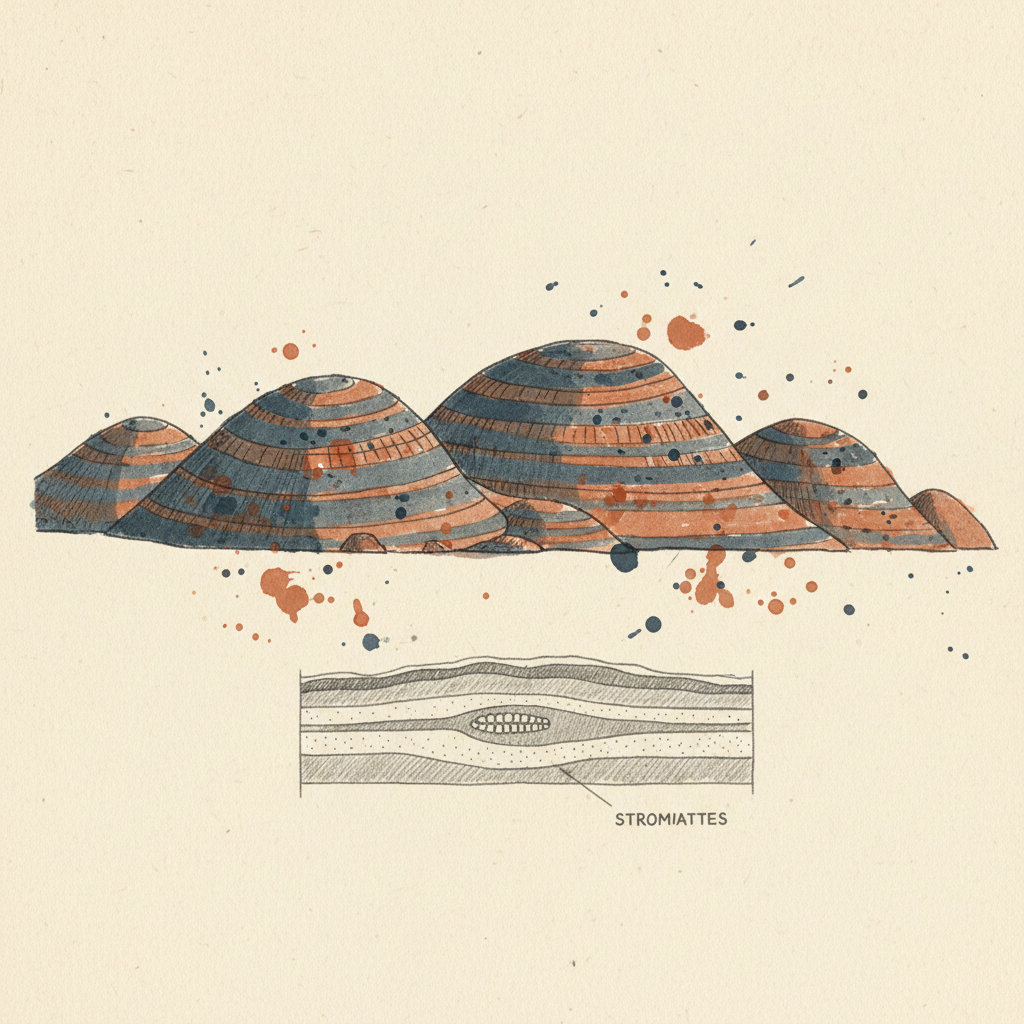
The most striking feature of Purnululu is the rhythmic banding of grey and orange that wraps around the domes like a topographical map. This is not merely a trick of the light or a variation in the rock’s internal chemistry, but a biological phenomenon. The darker bands are layers of cyanobacteria—ancient microbial life that thrives on the moisture trapped within the more porous layers of the sandstone.
The orange bands, by contrast, are layers of oxidized iron. In these sections, the rock dries out too quickly for the bacteria to survive, allowing the iron minerals to "rust" in the sun, creating a protective patina of iron oxide. This creates a self-sustaining cycle of preservation:
- The cyanobacteria layers trap moisture, which helps bind the fragile sand grains together.
- The iron oxide crust acts as a hard casing, shielding the softer interior from rapid erosion.
- The alternating permeability of the sandstone layers dictates where each "skin" can grow.
A Fragile Equilibrium
Despite their massive appearance, the Bungle Bungles are incredibly fragile. The sandstone is so lightly cemented that it can often be crushed between two fingers; the towers only stand because of the protective biological and mineral crusts that coat their exterior. If that skin is broken by human footsteps or heavy rain, the interior sand washes away with startling speed.
"The landscape is a paradox of endurance and fragility, where the oldest lifeforms on Earth provide the structural integrity for a mountain range."
This fragility is why the Bungle Bungles are home to "hidden" ecosystems. Deep within the narrow chasms between the domes, the temperature can be significantly lower than on the sun-baked plateau above. Here, remnants of ancient rainforest species persist in the shade, watered by the same seepages that sustain the cyanobacteria.
The Descent of the Plateau
The domes we see today are actually the remnants of a much larger plateau that once sat at a higher elevation. As the surrounding plains were lowered by erosion over the last 20 million years, the Bungle Bungles were "exhumed" from the landscape. They are a work in progress, a transitional state between a solid block of ancient river-sand and the flat red dust of the Kimberley floor.
The scale of the formation is deceptive. From the air, they look like a cluster of small mounds, but on the ground, the towers rise up to 250 meters. They represent a rare moment in geological time where the rate of erosion and the strength of the rock's "skin" are in perfect balance, holding a 360-million-year-old secret in a state of arrested decay.
More like this
- The 110-Million-Year-Old River That Runs Backwards UndergroundWestern Australia's 110-million-year-old dune system has been slowly dissolving into a labyrinth of caves where an ancient river still flows, carrying the taste of a Cretaceous desert.
- The 5,000-Year-Old Volcanoes That Still Smoke in the SouthIn Victoria's Newer Volcanics Province, 400 volcanic vents erupted as recently as 5,000 years ago—the youngest volcanic field in mainland Australia, where craters still hold blue lakes and scoria cone
- The 560-Million-Year-Old Garden That Never Saw a PredatorIn South Australia's Flinders Ranges, 560-million-year-old Ediacara surfaces preserve entire seafloor communities of fronds, discs, and quilts — a garden of soft-bodied life that flourished before pre