8 May 2026 · 2 min read
The Recycled Range: The S-Type Granites of New England
Explore the S-type granites of the New England Orogen, where ancient seafloor sediments were recycled into massive granite plateaus 300 million years ago.
High in the high country of the New England Orogen, the rocks of the Bundarra Supersuite contain a chemical signature that should not exist in a typical volcano. These granites are not the product of melting the deep mantle, but are instead the recycled remains of an entire mountain range, melted in its own basement.
The Cannibalized Crust
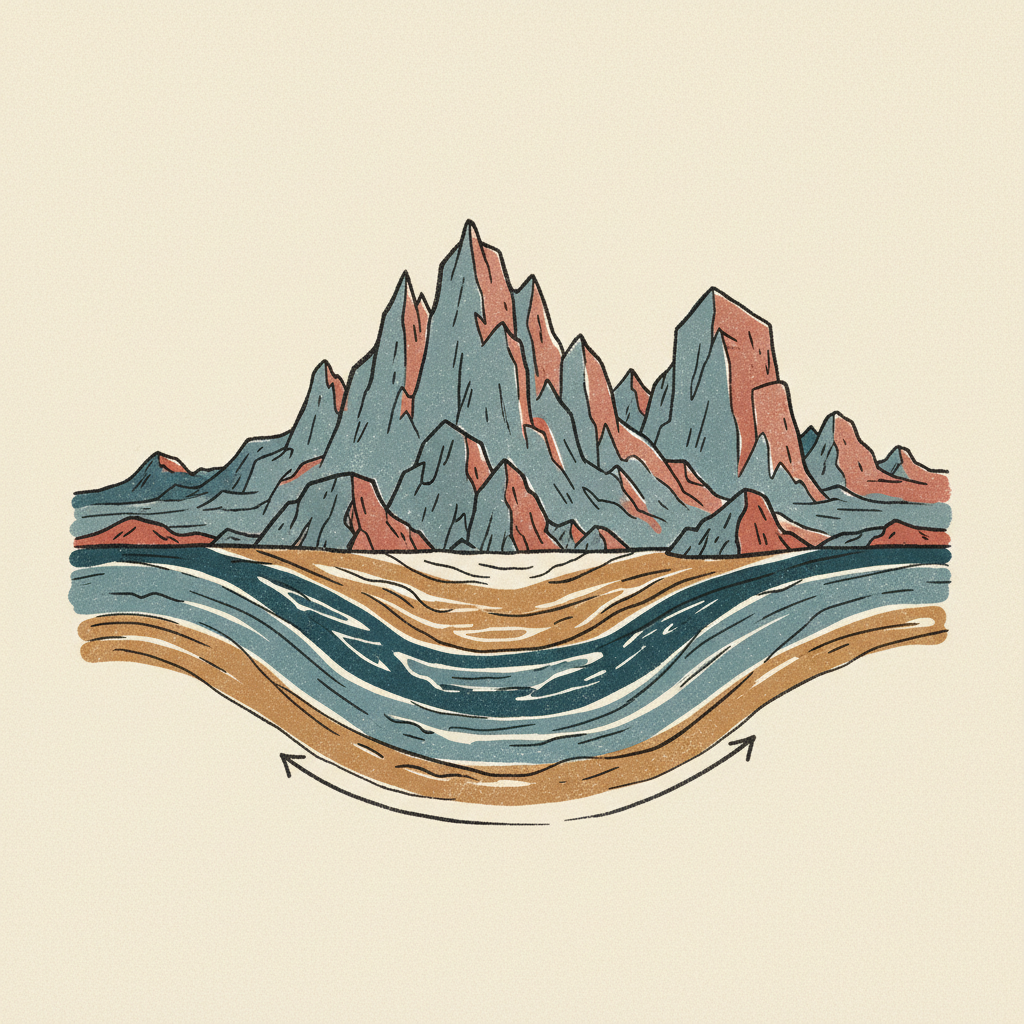
In the late Carboniferous, roughly 300 million years ago, the eastern edge of Australia was a chaotic margin of subduction and collision. As the paleo-Pacific plate dove beneath the continent, it didn't just generate standard volcanic arcs. It compressed the crust so severely that thick sequences of seafloor muds and sands were shoved deep into the hot interior of the earth.
These sediments, known as the S-type granites (meaning "supracrustal" or sedimentary-derived), represent a moment of geological recycling. Rather than bringing new material up from the mantle, the earth began to digest itself. The Bundara and Hillgrove Supersuites in New South Wales are the cold, crystalline remains of this process, where the grit of ancient rivers was transformed back into molten rock.
The Clues in the Crystal
You can see the sedimentary ancestry of these rocks in their mineralogy. Most granites are rich in hornblende, a mineral typical of igneous origins. The S-type granites of the New England region are different; they are crowded with garnet, cordierite, and ilmenite—minerals that only form when aluminum-rich clays and mudstones are subjected to extreme heat.
The presence of red garnet in a granite outcrop is a silent witness to a previous life as seafloor silt, transformed by pressure that would have crushed a mountain.
Because these magmas were derived from water-rich sediments, they were unusually viscous. They did not flow easily. Instead of erupting as fluid lavas, they pooled in massive subterranean chambers several kilometers wide. Over millions of years, they cooled into the coarse-grained, "dirty" looking granites that now form the rugged spine of the Northern Tablelands.
The Orogenic Collapse
The transition from a muddy seabed to a granite plateau required a massive tectonic pivot. After the sediments were melted, the compression of the New England Orogen eventually ceased. The crust, thickened and overbalanced by its own weight, began to stretch and collapse. This extension allowed the buried granite plutons to rise closer to the surface through buoyant force.
Today, the Bundarra granites are exposed by the relentless work of the Great Escarpment’s drainage systems. The Macleay and Clarence river systems have stripped away the softer overlying rocks, leaving the resistant granite cores as high-altitude plateaus. These are the "basement" rocks of the New England region, providing the nutrient-poor, acidic soils that support unique heathlands and stringybark forests.
The landscape is a tombstone for a vanished ocean. Every outcrop of the Bundarra suite is a reminder that the solid ground beneath the Australian bush is often just a second-hand version of a world that existed hundreds of millions of years ago.
More like this
- The 110-Million-Year-Old River That Runs Backwards UndergroundWestern Australia's 110-million-year-old dune system has been slowly dissolving into a labyrinth of caves where an ancient river still flows, carrying the taste of a Cretaceous desert.
- The 5,000-Year-Old Volcanoes That Still Smoke in the SouthIn Victoria's Newer Volcanics Province, 400 volcanic vents erupted as recently as 5,000 years ago—the youngest volcanic field in mainland Australia, where craters still hold blue lakes and scoria cone
- The 560-Million-Year-Old Garden That Never Saw a PredatorIn South Australia's Flinders Ranges, 560-million-year-old Ediacara surfaces preserve entire seafloor communities of fronds, discs, and quilts — a garden of soft-bodied life that flourished before pre